
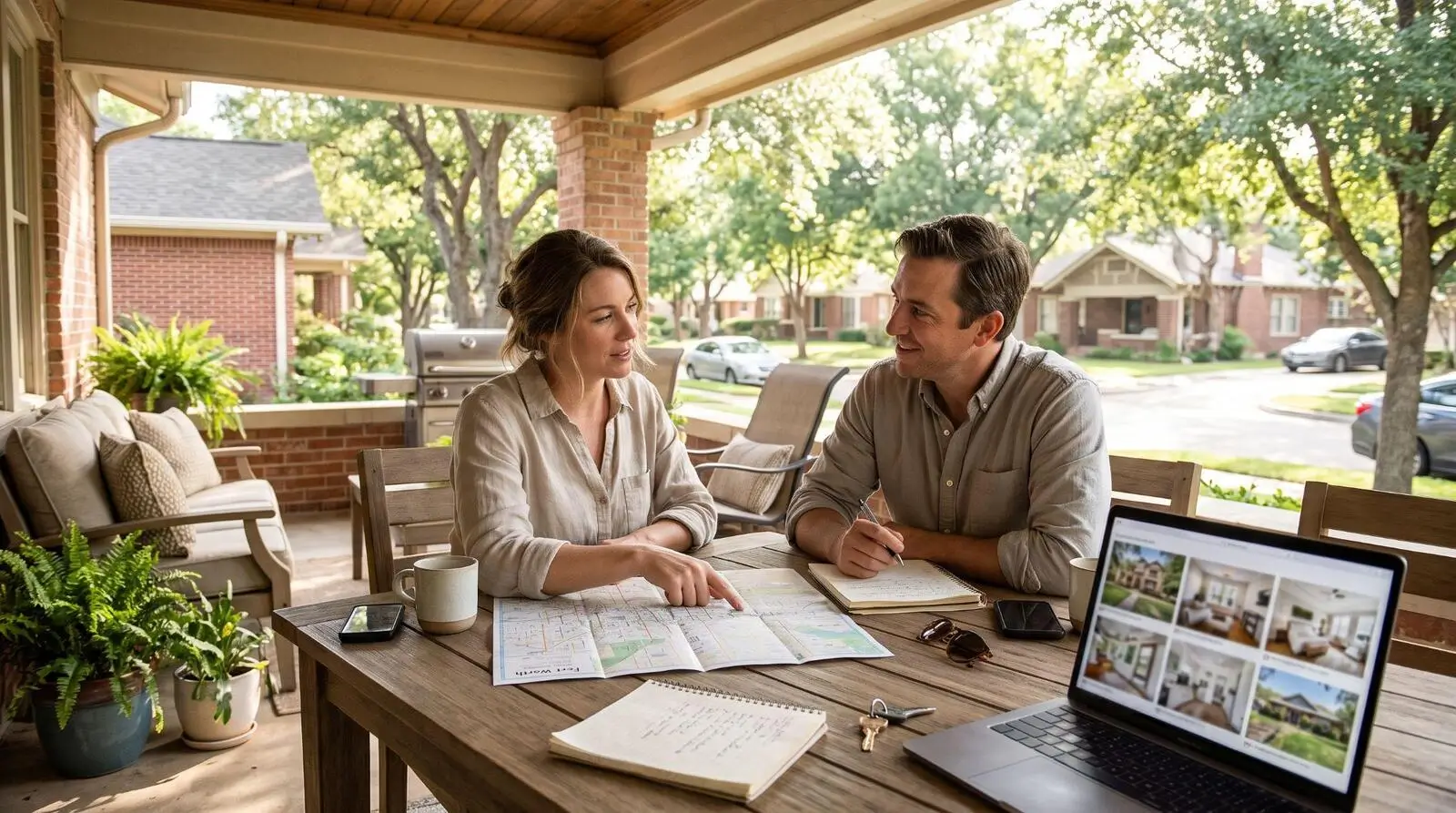
Fort Worth is officially one of America’s 10 biggest cities. New Census data shows the city passed Jacksonville, Florida, in 2025 and now has about 1.03 million residents.
If you’re planning a move, the ranking matters less than the everyday questions. Which part of town fits your budget? What does it take to get approved for a rental? How long is the commute, and how hot are the summers?
We’ve leased and managed homes across Fort Worth and Tarrant County for more than three decades. This guide combines public data with what we see in our own listings and applications, so you get a realistic picture of renting and living here.
Key Takeaways
- Fort Worth has about 1.03 million residents and ranks as the 10th-largest city in the U.S.
- Of the 24 homes we had available for rent on October 22, 2026, the typical three-bedroom was listed at $2,095 a month.
- Most rental homes in Fort Worth require household income of about three times the monthly rent, plus clean rental history and a credit check.
- Texas has no state income tax, but property taxes are higher than in many states, and that cost shows up in rent.
- Short-term rentals are banned in most residential zoning districts, so long-term rentals are the main option for investors.
Fort Worth at a Glance
Fort Worth covers 361 square miles, most of it in Tarrant County, though the city limits stretch into Denton, Johnson, Parker, and Wise counties. A home in far north Fort Worth and one near Benbrook Lake can share a city name and still be 40 minutes apart, so the address you choose shapes your commute, school district, and rent.
According to the City of Fort Worth, about 43% of households rent. Dallas is about 30 miles east.
Fort Worth by the Numbers
Why People Are Moving to Fort Worth
Jobs and cost are the two biggest reasons. Texas doesn’t tax income, and the city’s economy keeps adding employers in aviation, logistics, and manufacturing.
Fort Worth added more than 170,000 residents between 2010 and 2020, the fastest pace of any large U.S. city that decade. While several big cities stalled between 2024 and 2025, Fort Worth kept growing.
A lot of that growth reaches us through corporate relocations. As we noted in our post on how corporate relocations are changing rental demand, many of these renters are moving from out of state or overseas. Many choose a home sight-unseen or after a single visit, and they’re usually working against a job start date. For them, virtual tours, fast application turnaround, and flexible move-in dates matter more than anything else.
Cost of Living in Fort Worth
Rent
Apartment rent data published on September 30, 2026, puts the average Fort Worth apartment at $1,463 a month. One-bedrooms average $1,274, two-bedrooms $1,609, and three-bedrooms $2,079.
Rental houses cost more than apartments of the same size. On October 22, 2026, we had 24 homes available for rent across Fort Worth and nearby cities. Fifteen were three-bedroom homes, listed between $1,795 and $2,695, with a typical (median) rent of $2,095. Our six four-bedroom homes ranged from $2,350 to $3,295.
| 2 Bedrooms (2 homes) | $1,485 | |||
| 3 Bedrooms (15 homes) | $2,095 | |||
| 4 Bedrooms (6 homes) | $2,823 |
Median listed rent by bedroom count for homes 1st Choice had available on October 22, 2026. Two- and four-bedroom figures are based on a small number of homes.
Location drove most of the difference. Five of those three-bedroom homes were listed at $2,000 or less, all in North Fort Worth ZIP codes 76137 and 76179, in Haslet, or near TCU in 76109. The most expensive homes were on the west side, including a four-bedroom in 76116 for $3,295.
Rents across the city were roughly flat over the past year as new apartment construction gave renters more choices. That gives tenants more room to compare homes, but well-priced homes in popular school zones still move quickly.
Buying a Home
The median home sale price in Fort Worth is about $330,000 as of September 2026, down 1.5% from a year earlier. Older neighborhoods near TCU and the Cultural District still sell at a premium.
Taxes and Utilities
Texas skips the income tax but collects in other ways. Sales tax in Fort Worth is 8.25%. Property taxes are the higher cost because each bill stacks rates from the city, Tarrant County, your school district, the hospital district, and Tarrant County College. The city’s share alone for FY2027 is $0.70565 per $100 of value.
Renters don’t pay that bill directly, but it’s built into rent, along with insurance premiums that have climbed quickly in Texas.
Most of the city has a deregulated electricity market, so you can choose your own provider. Budget roughly $120 to $150 a month for 1,000 kWh outside of summer and more from June through September.
Income You’ll Need to Rent
Many professional landlords in Fort Worth use an income multiple rather than a budget percentage. Under our rental qualifications, one applicant must earn at least three times the monthly rent, or two adults living in the home can combine income to reach 3.5 times the rent. For a $2,095 three-bedroom, that means about $6,285 a month in gross income for a single applicant.
Best Fort Worth Neighborhoods
Choosing a neighborhood in Fort Worth usually comes down to three questions. Where do you work? Do school zones matter to you? And do you want an older home with character or something built in the last 10 years? Each answer narrows the map, and each area comes with trade-offs worth knowing before you apply.
- 1CommuteWhere do you work?
- 2SchoolsDo school zones matter to you?
- 3Home StyleAn older home with character or something built in the last 10 years?
Downtown and Sundance Square
Downtown is the most walkable part of the city, with Sundance Square, Bass Performance Hall, and dozens of restaurants within a few blocks. Housing is mostly apartments and lofts. It suits singles and couples, but families who need a yard and garage will usually look elsewhere.
Near Southside and Fairmount
Magnolia Avenue anchors this area with local restaurants and coffee shops, and it sits on the edge of Fairmount, one of the largest historic districts in the Southwest. Many homes are more than 100 years old, which means character along with older plumbing, smaller closets, and higher cooling bills. The nearby hospital district makes it popular with medical staff.
Arlington Heights and the Cultural District
Arlington Heights is a west Fort Worth neighborhood, not part of the city of Arlington. It has brick Tudors and Craftsman homes close to the Kimbell Art Museum, Dickies Arena, and the West 7th district. Expect to pay for the location. A three-bedroom we listed in ZIP code 76107 in October 2026 was priced at $2,695.
TCU Area
Around Texas Christian University, Westcliff has mid-size homes and some of the city’s lowest average apartment rents, around $1,001. Tanglewood is quieter and more upscale, and historic Ryan Place sits east of campus. Rental houses near campus can be good value, like the three-bedroom we listed in 76109 for $1,995, but nearby student housing can mean more traffic and noise on game days.
North Side and the Stockyards
The North Side is one of Fort Worth’s oldest areas, with longtime family-owned restaurants and shops near the Stockyards. Housing is a mix of older bungalows and newer infill homes, and prices are generally lower than on the west side.
Far North Fort Worth and Alliance
This is the city’s main growth corridor, driven by AllianceTexas, a 27,000-acre development home to more than 600 companies. North Fort Worth, the Alliance corridor, Saginaw, Haslet, and Northlake sit closest to the industrial and manufacturing employers behind recent relocations.
Our inventory reflects that. Of the 24 homes available on October 22, 2026, 14 were in North Fort Worth ZIP codes (76131, 76137, 76179, and 76244) or in the northern towns of Haslet, Justin, and Watauga. Many homes here are newer and zoned to Keller ISD or Northwest ISD. The main trade-off is I-35W traffic at rush hour, so test your commute before you sign.
| Area | The Draw | The Trade-Off |
|---|---|---|
| Downtown | Most walkable part of the city | Mostly apartments and lofts |
| Near Southside and Fairmount | Historic character near Magnolia Avenue | Older plumbing, smaller closets, higher cooling bills |
| Arlington Heights | Close to museums and West 7th | Higher rent ($2,695 three-bedroom listed in 76107) |
| TCU Area | Good value ($1,995 three-bedroom listed in 76109) | Traffic and noise on game days |
| Far North and Alliance | Newer homes, Keller ISD and Northwest ISD | I-35W traffic at rush hour |
Example rents are from homes 1st Choice had available on October 22, 2026.
Southwest and West Fort Worth
Southwest Fort Worth includes established Wedgwood along with newer communities like Chisholm Trail Ranch and Edwards Ranch Clearfork, which has the highest average apartment rents in the city at about $2,464. West of downtown, along I-30, master-planned communities draw families, and some homes are zoned to Aledo ISD. Commutes into downtown from the west side usually run against peak traffic.
East Fort Worth
East Fort Worth tends to be more affordable and sits closer to DFW Airport, Arlington, and Dallas than most of the city. Historic Handley, Texas Wesleyan University, and Gateway Park are all here. We listed a three-bedroom in ZIP code 76120 in October 2026 for $2,295.
Nearby Cities
Many people who work in Fort Worth live in Keller, Southlake, Grapevine, North Richland Hills, Watauga, or Mansfield. Each has its own school district and tax rate, which affects both rent and what owners pay to hold a property.
Jobs and the Fort Worth Economy
American Airlines is headquartered in Fort Worth, and Lockheed Martin builds the F-35 on the west side next to Naval Air Station Fort Worth Joint Reserve Base. Bell Flight, Alcon, BNSF Railway, and JPS Health Network are also major employers, along with local school districts and colleges.
Major Fort Worth employers
- ✓American Airlines
- ✓Lockheed Martin
- ✓NAS Fort Worth Joint Reserve Base
- ✓Bell Flight
- ✓Alcon
- ✓BNSF Railway
- ✓JPS Health Network
- ✓Local school districts and colleges
AllianceTexas has generated more than 73,000 direct jobs since 1990, mostly in logistics, manufacturing, and aviation. Fort Worth is also one of only two places in the country that prints U.S. paper money, alongside Washington, D.C.
For renters, steady employment matters at application time. Professional screening typically verifies income through the employer or recent pay stubs, and self-employed applicants should expect to provide two years of tax returns.
Schools and Education in Fort Worth
Thirteen school districts serve parts of Fort Worth, and your street address decides which one your children attend. Two homes a mile apart can be zoned to different districts, so confirm the exact address before you apply for a rental.
Fort Worth ISD, the largest district in the city, has been under state oversight since fall 2025. In the Texas Education Agency’s preliminary 2026 ratings, released August 14, 2026, the district held a C with an overall score of 77, up from 73. It had seven F-rated campuses and 17 A-rated campuses. Final ratings are expected in December 2026.
- 12023D rating
- 22024C rating
- 32025C rating
- 4Fall 2025State oversight begins
- 5Aug. 2026Preliminary C, score of 77
Northwest ISD, which serves much of far north Fort Worth, earned a B in the 2026 release. Ratings vary a lot from campus to campus, so check individual schools on TXschools.gov.
For higher education, Fort Worth has TCU, Texas Wesleyan University, Texas A&M University-Fort Worth, a UT Arlington campus, and Tarrant County College.
Getting Around Fort Worth
Most residents drive. The main routes are I-35W, I-30, I-20, Loop 820, and the Chisholm Trail Parkway, and I-35W through north Fort Worth is the corridor most likely to slow you down at rush hour.
TEXRail runs 27 miles from downtown Fort Worth to DFW Airport’s Terminal B, with stops at the Stockyards and Grapevine. A single ride costs $2.50. The Trinity Railway Express connects Fort Worth to downtown Dallas.
What Is the Weather Like in Fort Worth?
Summers are long and hot. According to the National Weather Service, the area usually reaches its first 100-degree day around July 1, and 100-degree days can continue through late August.
Winters are short and mild, with about two inches of snow a year on average. Spring brings hail and severe storms, which is why covered parking matters to many renters. Renters insurance is worth having, and many professional landlords, including us, require it.
Heat also affects your monthly budget. When you tour a rental, ask about the age of the A/C system, window shading, and average summer electric bills.
Things to Do in Fort Worth
Fort Worth Stockyards
The Fort Worth Herd drives longhorns down East Exchange Avenue daily at 11:30 a.m. and 4 p.m., and it’s free to watch. Billy Bob’s Texas, a 100,000-square-foot honky-tonk, hosts concerts and weekend bull riding nearby.
Cultural District
The Kimbell Art Museum, the Modern Art Museum of Fort Worth, the Amon Carter Museum of American Art, the Museum of Science and History, and the National Cowgirl Museum are all within a few blocks of each other.
Cultural District museums
- ✓Kimbell Art Museum
- ✓Modern Art Museum of Fort Worth
- ✓Amon Carter Museum of American Art
- ✓Museum of Science and History
- ✓National Cowgirl Museum
Fort Worth Botanic Garden and Fort Worth Zoo
The Fort Worth Botanic Garden opened in 1933, making it the oldest in Texas, and includes a well-known Japanese Garden. The Fort Worth Zoo sits near Forest Park.
Food and Nightlife
Barbecue and Tex-Mex lead the local food scene. Heim Barbecue on Magnolia Avenue and Joe T. Garcia’s on the North Side, open since the 1930s, are two local favorites. Sundance Square and West 7th are the most popular areas for a night out.
Annual Events
The Fort Worth Stock Show & Rodeo is the city’s oldest and largest event, drawing more than 1.2 million visitors from mid-January into early February. Spring brings the Main St. Fort Worth Arts Festival, Mayfest along the Trinity River, and the Charles Schwab Challenge at Colonial Country Club.
Parks and Outdoor Life
The city manages about 300 parks covering roughly 13,000 acres. The Trinity Trails cover about 100 miles along the river and connect areas like the Stockyards and the Cultural District.
The Fort Worth Nature Center & Refuge adds more than 3,600 acres with a resident bison herd. Eagle Mountain Lake, Lake Worth, and Benbrook Lake are close by for boating and fishing.
Sports
TCU football plays at Amon G. Carter Stadium, Texas Motor Speedway hosts NASCAR in far north Fort Worth, and the Texas Rangers and Dallas Cowboys play about 20 minutes away in Arlington.
Renting a Home in Fort Worth
About 43% of Fort Worth households rent, and renting first is a practical way to learn the city before buying. A one-year lease lets you test the commute, school zone, and neighborhood before you commit.
What It Takes to Get Approved
Requirements vary by landlord, but here’s what applicants should expect with us, based on our published rental qualifications:
One applicant earning at least three times the rent, or two adult occupants combining income to reach 3.5 times the rent. We don’t accept co-signers.
We pull Experian reports directly. Scores below 500 are denied, and your security deposit is based on your score.
An eviction, broken lease, or landlord judgment in the last five years is an automatic denial. Applicants with no rental history pay a double deposit.
Each person 18 or older who will live in the home submits an application ($85 each) with a valid photo ID and Social Security card.
Up to two pets, screened through PetScreening.com, with monthly pet fees based on the screening score. Breed restrictions apply, and dogs require a fenced yard.
Timing is where many applications stall. Applicants have 24 to 48 hours to submit all requested documents, or the application is treated as incomplete. Processing then takes three to five business days. Once approved, you have two business days to pay the deposit in certified funds and sign the lease. And when several people apply for the same home, the most qualified applicant is approved, not the first one in line.
- 1Apply Online$85 per adult, all adults apply together
- 2Send DocumentsWithin 24 to 48 hours
- 3Processing3 to 5 business days
- 4Sign and PayDeposit in certified funds within 2 business days
Know Your Rights as a Texas Renter
Texas law requires landlords to make their tenant selection criteria available in writing when you apply. If a landlord rejects you without having done that, you’re entitled to a refund of your application fee.
After you move out, a landlord has 30 days to refund your security deposit or provide an itemized list of deductions. That clock depends on you providing a written forwarding address, so give one when you return your keys.
Ready to look? Browse our current Fort Worth homes for rent.
What Fort Worth Property Owners Should Know
If you own a rental in Fort Worth, or plan to buy one, the city’s growth works in your favor, but it doesn’t guarantee results. Rents have been flat, insurance costs have climbed, and property taxes take a real bite out of cash flow. New build-to-rent communities are also competing for the same tenants.
Pricing is where most owners win or lose. A home priced above nearby comparables sits empty, and one priced too low leaves money on the table for the entire lease. On our portfolio, the average time to lease a home is 14 to 30 days, depending on property type, price, and location. Pet-friendly homes tend to lease faster because they reach more applicants.
Screening protects that investment. Texas requires written selection criteria, and applying the same standards to every applicant supports Fair Housing compliance. With consistent screening, the eviction rate on homes we manage has stayed below 1%.
If you’re considering Airbnb, know the rules first. Fort Worth bans short-term rentals (stays of 1 to 29 nights) in most residential zoning districts, and a state appeals court upheld the ban in May 2026. For most owners, a well-maintained long-term rental with a qualified tenant is the more reliable path. Our post on why investors are still buying in Fort Worth covers the opportunities in more detail.
Pros and Cons of Living in Fort Worth
Fort Worth offers no state income tax, a diverse job market, world-class museums, a growing trail system, and easy access to DFW Airport. Renters also have more choices than they did a few years ago.
The trade-offs are summer heat, high property taxes, and a car-dependent layout. School quality depends heavily on your exact address, and rental approval standards are stricter with professional landlords than many newcomers expect.
| Pros | Cons |
|---|---|
| No state income tax | Summer heat |
| Diverse job market | High property taxes |
| World-class museums | Car-dependent layout |
| Growing trail system | School quality depends on your exact address |
| Easy access to DFW Airport | Stricter rental approval standards than many newcomers expect |
Frequently Asked Questions
Make Fort Worth Home with a Local Team on Your Side
Fort Worth rewards people who plan ahead. Pick the right neighborhood and school zone, know the approval requirements before you apply, and budget for the heat and the tax bill.
At 1st Choice Property Management, we’re a family-owned team serving Fort Worth and about 30 surrounding communities. If you’re moving to town, browse our homes for rent and review our rental qualifications before you apply. If you own a rental, schedule a consultation or call us at 817.281.1300 to learn how our tenant screening, in-house maintenance team, and 30-Day Leasing Pledge can work for you.
Own a Rental in Fort Worth?
Call us at 817.281.1300 to learn how our tenant screening, in-house maintenance team, and 30-Day Leasing Pledge can work for you.
Schedule a Consultation